
Teenagers have busy lives. Between their schoolwork, friendships, sports, and the numerous other responsibilities they face each day, oral hygiene is often overlooked. Some of the habits teenagers develop can lead to oral health problems that can last well beyond their teenage years.
One of the biggest mistakes that people can make in terms of their oral hygiene is rushing through the process of brushing their teeth or skipping brushing altogether. Brushing your teeth for two minutes in the morning and at night helps to remove plaque from your teeth, which can lead to cavities if left unremoved.
A further issue that often affects teenage consumers is the type of drink that they consume. Many energy drinks, fizzy drinks and fruit juices contain high amounts of sugar and acid. These types of drinks are likely to contribute to the development of conditions such as tooth decay and enamel erosion. In contrast, water is a much healthier alternative for the teeth. For a Dentist Bournemouth, visit https://gentledentistry.co.uk/
Finally, sports. Teenagers who participate in sports that involve contact with other players should wear a mouthguard to protect their teeth from breaking or being knocked out. The cost of repairing damaged teeth is expensive and time-consuming.
Braces bring with them some more challenges. For instance, food often becomes trapped between the brackets and wires of braces, requiring people to be extra careful with their oral hygiene. While it may be tempting to avoid flossing due to the increased amount of effort required, flossing is actually the most important step in maintaining oral hygiene for people with braces.
Some teenagers avoid visiting the dentist altogether due to fear of being judged by the dentist. However, dentists have seen many different types of dental problems within their patients each day and are dedicated to helping people achieve better oral health rather than lecturing them.
Extra care when wearing braces
Rushed brushing is a problem for any teenager, but it matters even more for those wearing braces. Plaque builds up quickly around the brackets and cleaning there is awkward, so brushing twice a day may no longer be enough. Brushing after every meal stops plaque settling on the brackets, and when that is not possible, rinsing with water or mouthwash helps.
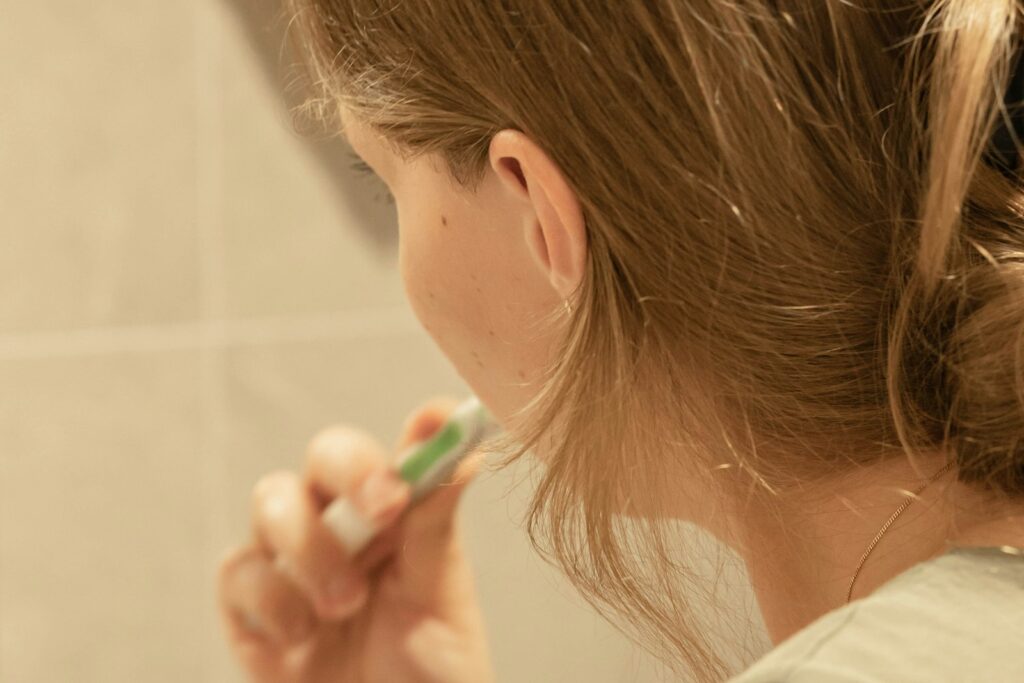
Flossing around wires is fiddly, which tempts many teenagers to skip it. A water flosser reaches the difficult areas more easily, and there are also special aids designed for flossing around an orthodontic wire. After brushing and flossing have loosened the plaque, a mouth rinse helps wash it away.
Regular orthodontic appointments are just as important. Cancelling them, except in a genuine emergency, can put treatment off schedule. Keeping a healthy mouth with braces takes a little more effort, but it is entirely possible with these habits.
Daily habits that protect young teeth
Diet plays a bigger part in dental health than many teenagers realise. Food and drink high in sugar and fat can cause a range of problems, the worst of which is tooth decay. Learning to eat well early on helps prevent it and can save a lot of time and money at the dentist later.
Brushing twice a day, once in the morning and once at night, is the foundation. Flossing every day matters just as much, because it removes the food trapped between teeth that brushing misses. Left there, it helps plaque and tartar build up, which harms the teeth and dulls a smile.
None of this needs to be expensive. A good routine costs very little, and within a few weeks of sticking to it, the difference in how teeth look and feel is often easy to see.